Last year AI roared into schools and they are still grappling with how to manage it in classes. Although much of the focus has been on writing with AI, one shouldn't forget about AI use to solve math problems. Take https://www.gauthmath.com for example. It can be used to solve math problems. It is advertised to be a "helper"...but is it being used that way? I would be interested to hear your thoughts about how AI use in math classes is being managed.
"Those who can, do. Those who can do more, teach" Welcome to TekWerks! Tek Werks is the professional blog for Mr. Jesse Remington (me :-). On this site I put my thoughts, useful links and other information related to technology in education and education in general.
Saturday, August 31, 2024
Monday, March 12, 2018
Teaching Design Thinking in Schools
Project Design Space
Last school year I was presented with the opportunity to bring in an innovative design thinking-related program to our school sponsored through the Dubai Institute of Design and Innovation, called Project Design Space.The program "... provides a unique opportunity for high school students to gain real-world experience in the field of design. Project Design Space sets itself apart from other innovation clubs by offering student teams the rare opportunity to work on real design projects for actual clients. Our collaborators (“clients”) for this year’s design project challenges are Adidas, IBM and Alserkal Avenue. We are also collaborating with Expo 2020 Dubai."
Teams of students design and present their solutions for various challenges. If their team is selected, they then go present to a panel of judges for various prizes and notoriety. If their team is selected overall, they then may be given the chance to further develop it as well as gain additional training at the DIDI itself. Myself and another teacher were trained in the program as well as Design Thinking Methodologies, and proceeded to have interested students signup to participate and form teams. We then trained the teams in Design Thinking approaches and they designed solutions for the challenge. The first challenge for student teams was to design a solution for an advertising campaign for an organization. One of ASD's 4 teams were selected based upon a video they made and went to present. They placed 3rd overall and gained wonderful experience in how to solve problems, collaborate, communicate, and present.
Teaching students how to think creatively about how to approach and solve problems is a skill that needs woven into every aspect of all curriculums and subjects. Teaching skills that computers cannot do will be key to students future success. Project Design Space is a real-world and hands-on program that helps students achieve this objective and I am looking forwards to having more students participate in future challenges.
Saturday, June 3, 2017
Cutting Down on Cheating
Exam season is here! And with it comes lots of stress from students about how to get the best grade, and the instances of cheating go up. Below are some suggestions on how to cut down on that in classes.
Preventing Cheating By Shaping the Motivational Climate of Classrooms
Excerpted from: “The Relation Between Academic Motivation and Cheating” by Eric Anderman and Alison Koenka in Theory Into Practice, Spring 2017 (Vol. 56, #2, p. 95-102)
“Academic cheating occurs frequently in schools,” say Eric Anderman and Alison Koenka (The Ohio State University) in this article in Theory Into Practice. “Cheating is a deliberative act, in that students make a conscious decision to engage in academic dishonesty.” Why is there so much cheating – 75 percent of students admit to it in high school or college – and what can be done about it? There are three questions students might ask themselves as they confront a situation where they might be tempted to cross the line:
• What is my goal in this class? Among the possibilities: Getting a good grade; really learning and understanding the material; doing better than my classmates; not looking dumb. The key variable is whether the teacher and students are more focused on mastery (really learning the material) or performance (for extrinsic or intrinsic rewards).
• Can I do this? This involves students’ beliefs about their skillset and ability to complete the task, their expectations for success, and whether the teacher will evaluate the work fairly. Research has shown that low self-efficacy is a key factor in students cheating.
• What are the costs of cheating? Students consider the chances of being caught and punished, the effect of being a cheater on their self-concept, and guilt – and whether they’re willing to live with any or all of those outcomes.
Anderman and Koenka say that classrooms focused on mastery and intrinsic motivation have much less cheating: “If students are learning in an environment in which they (a) are encouraged to master the material, and (b) have the opportunity to work on various tasks, activities, and assessments until they reach a point of mastery, then cheating serves little purpose and results in minimal benefits… In contrast, when students learn in environments that are highly competitive and stress relative ability and exam performance (i.e., extrinsic or performance goals), cheating will be a more viable option for students.” The same is true for situations where students are anxious to avoid appearing incompetent.
Anderman and Koenka have the following suggestions for principals and teachers who want to minimize cheating in classrooms:
• Emphasize mastery. One of the best ways is framing assessments as opportunities for students to improve understanding (through formative checks for understanding), enrich learning (through detailed feedback on attempts), and demonstrate proficiency (in summative tests). It’s especially helpful to allow students to re-take assessments until they demonstrate mastery. Teachers should also make parents aware of learning goals and assessments.
• Orchestrate cooperative learning. Handled well, this can foster a mastery orientation and discourage cheating. The key conditions are that students in cooperative learning groups are interdependent, have a common goal, are individually accountable for learning, build interpersonal skills, and have their eye on the bigger picture of the curriculum unit.
• Don’t stress students out about grades. Rather than saying, “Friday’s test is really big; if you fail it, you’re sunk for the semester,” say, “Friday’s test covers concepts that are fundamental building blocks for your understanding of more advanced material.”
• Clearly communicate learning and assessment expectations. When students don’t know what will be covered on a test, aren’t clear on the criteria for a successful essay, or believe grading policies are unfair (e.g., grading on a curve), they’re more likely to cheat.
• Don’t publicize students’ grades. Some teachers believe that displaying test results or hanging up A assignments is a motivator, but Anderman and Koenka say these practices convey a performance goal structure. Rather than public display of grades or papers, they recommend giving students private feedback on what’s effective and what needs to be improved, and not comparing work with that of other students. “In cases where providing exemplars is necessary,” say the authors, “we recommend aiming to provide specific ones from every individual’s or team’s assessments (e.g., a particularly strong topic sentence from one team and an especially creative approach to solving a problem from another team).”
• Talk about cheating. Students and parents should be crystal clear on what constitutes cheating, the strong likelihood of being caught, and the serious consequences that will ensue. But the emphasis should be on how cheating undermines the real goal: mastering the material.
Thursday, May 18, 2017
A Plan to Kill High School Transcripts … and Transform College Admissions
One of the things that I notice teaching and working with both MS and HS students, is the change that happens from MS to HS- between grade 8-9th grade in terms of excitement for learning. 8th graders are excited about learning and trying new things. But when they become 9th graders they are not nearly as excited. The change is instantaneous. Why? In my opinion, HS students and 9th graders, understand that there are 4 years of high-stakes grading that goes on transcripts to colleges. Teachers are not as warm and fuzzy and expectations are higher at home and school. It is now time to jump through hoops, where everything counts towards that GPA and life after college.... They lose sleep, and get increasingly stressed out to the detriment of mental and physical health.
Now, some schools are taking it upon themselves to change that culture. This article from Inside Higher Ed, talks about some top private high schools that are trying to change that culture.
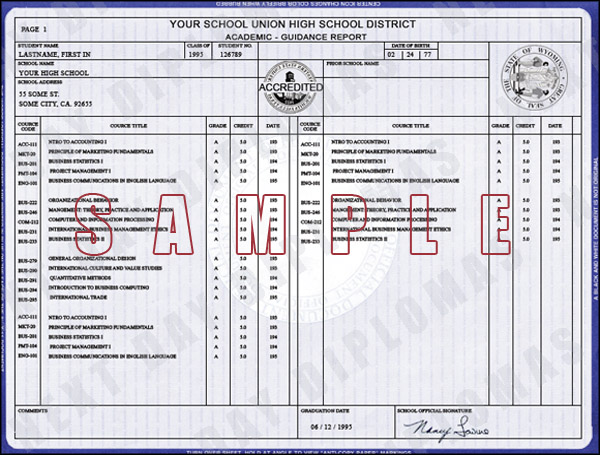
What if traditional high school transcripts -- lists of courses taken, grades earned and so forth -- didn't exist?
That's the ambition of a new education reform movement, which wants to rebuild how high schools record the abilities of students -- and in turn to change the way colleges evaluate applicants. Sounds like quite a task. But the idea is from a group with considerable clout and money: more than 100 private schools around the country, including such elite institutions as the Dalton School and the Spence School in New York City, plus such big guns as the Cranbrook Schools in Michigan, the Phillips Academy in Massachusetts and Miss Porter's School in Connecticut. The group is called the Mastery Transcript Consortium, and the product it hopes to create is the mastery transcript. It would not include courses or grades, but levels of proficiency in various areas. Instead of saying a student earned a certain grade in Spanish 2, the mastery transcript might say the student can understand and express ideas in some number of languages. And there could be different levels of mastery.
I love this idea and I look forward to see where it takes schools.
Sunday, April 23, 2017
Saturday, April 30, 2016
Personalized Learning: Preparing Students for Life by Developing Learner Agency
A quote from Personalized Learning website:
Harvard professor Roland Barth has observed that in the 1950’s when young people left high school they typically knew about 75% of what they would need to know to be successful in life. Today, he predicts that young people know about 2% of what they will need to know. (Barth, R.S. (1997, March 5). The leader as learner. Education Week, 16(23). 56.) This shift is not because young people are learning less than previous generations. In fact, there is good evidence that they know much more. The force behind this change is the rapid and ever-increasing pace of change, the complexity of the world in which we live and the unpredictability of what people will need to know in the coming decades - the future for which we are preparing today’s learners. - See more at: http://www.personalizelearning.com/2015/09/learner-agency-missing-link.html#sthash.UZg51B3u.dpuf
The school I work at has rightfully put a lot of emphasis on trying to meet the needs of individual students and differentiating. One of our core documents details what is called the Profile of a Graduate which calls for students to have the following characteristics when they graduate:
Thinker
Creative - Critical - Reflective - Adaptable - Persistent
Communicator
Effective - Confident - Collaborative
Contributor
Aware - Ethical - Respectful - Open-Minded - Compassionate
Learner
Engaged - Responsible - Self-Directed - Inquisitive
Leader & Role Model
Inspires - Guides
These have similar characteristics to the 21st Century Learner Skills, but are also designed to foster and develop life-long skills rather than just skills for a specific class. In the classes I teach which are project-based tech classes, there is a lot of room for being able to differentiate and individualize learning for students. So for example, some students in my Electronics Design class do not have any experience with electronics or programming. However, in the same class are students who do have advanced programming and technical skills. What I have done is to have the advanced students create learning proposals for course-related projects they want to work on. These are reviewed and then approved after some tweaking. This has allowed them to pursue interests and learn new things that challenge and inspire them, really developing learning agency within what they do. They are given a timeline to complete the project, then they present to the class. Emphasis is put on both the design and development phase, as well as having a finished project if possible. Similar proposal/projects happen in Engineering classes, Robotics, and Video Production classes. It can make the class seem a bit disorganized at times with many different projects happening at various speeds, but the students are engaged and are meeting the standards at different levels. It is a fun and authentic way to teach and develop Learner Agency and help students, learn how to learn and be persistent.
Thursday, April 21, 2016
Tech for Tech's Sake? Hope Not!
Tech for Techs Sake (not)
In this article by Nira Dale in TeachThought, there are four good reasons why you might not be reaching your students because of technology.
#1. You’re using technology for technology’s sake.
#2. The technology distracts from understanding.
#3. The teacher is still the audience.
#4 You’re neglecting authentic student voice & choice.
Read the article to find out more!
Friday, January 29, 2016
Why We All Need Time to Tinker With Tech
This was a good article on many levels. The last paragraph captured most of the main ideas:"Tinkering is not about the product, it’s about the process. Enjoy the journey and don’t focus so much on having a spiffy product that can be presented or showcased. There is a time and a place for presenting, but true integration is about the journey and what was learned along the way. Tinkering is messy, but fosters deeper learning because learners are doing the thinking. Embrace it. Find balance. Find relief in the fact that you do not have to have all of the answers."
In the engineering and electronics design classes I teach, they may not finish their final projects. So the question becomes, "how do you assess?" I focus more on a presentation of how students have developed their projects. I want them to dig into topics and building things that interest and challenge them, more than having prescribed, artificial due dates. Yes, during the course they are required to finish some prescribed projects in a time-frame and there is the need for kids to learn project management skills in any class. But the last one is for them. For each project they present the Design Process they followed (see previous post on a diagram we follow and design presentations about), and reflect on what worked, what did not. It was nice to see some validation from another corner with this philosophy.
Thursday, January 28, 2016
Career Day
So our school recently had career day. About 40 professionals from the professional world came to talk to students in various sessions that students attended. A very worthwhile morning was spent learning about engineering, nutrition, law, medicine, event planning, radio and a host of other occupations. Through it all, common themes seemed to come from all of the speakers though.
Get to know people- network. Another was approach and manage and solve problems in a organized manner- project management. This one made me think of how engineers approach and solve problems and develop solutions. In my tech department we are testing a design process model that we are using to help assess this process that students go through to help give them a strategy to solve problems and build things. Here is the model, a life skill model, which is directly related to aspects of our Profile of Graduate- problem solver, creativity and communicator we are trying to develop in students. Any feedback is welcome! It got me thinking about if it was possible to maybe develop a problem-solving model for every class that is taught. Writing courses use a writing process....Science has the Scientific Method....Library/Research as a variety of research methodologies...Social Studies has inquiry models....but what are the threads that are common in all of them? Basically problem solving, communicating the solution somehow, and project management/work habits.
So our school recently had career day. About 40 professionals from the professional world came to talk to students in various sessions that students attended. A very worthwhile morning was spent learning about engineering, nutrition, law, medicine, event planning, radio and a host of other occupations. Through it all, common themes seemed to come from all of the speakers though.
Get to know people- network. Another was approach and manage and solve problems in a organized manner- project management. This one made me think of how engineers approach and solve problems and develop solutions. In my tech department we are testing a design process model that we are using to help assess this process that students go through to help give them a strategy to solve problems and build things. Here is the model, a life skill model, which is directly related to aspects of our Profile of Graduate- problem solver, creativity and communicator we are trying to develop in students. Any feedback is welcome! It got me thinking about if it was possible to maybe develop a problem-solving model for every class that is taught. Writing courses use a writing process....Science has the Scientific Method....Library/Research as a variety of research methodologies...Social Studies has inquiry models....but what are the threads that are common in all of them? Basically problem solving, communicating the solution somehow, and project management/work habits.
Monday, March 2, 2015
Are you learning or are you App'ing?
I came across this article and had to agree with what it had to say. Too many times tech integration is learning how to use an app. Yes, some instruction on technology concepts or how to use a software is required before students are able to use it to demonstrate higher-level thinking. But t
10 Most Powerful Uses of Technology for Education
To Restate what the article said (although it was missing #4 :-):
1. Critical Thinking
2. Mobile Learning
3. Access to Education
5. Continuous Feedback
6. Unlimited and Immediate Learning
7. Creation and Contribution
8. Social Connectedness
9. Global Awareness
10. Understanding Learning
1. Critical Thinking
2. Mobile Learning
3. Access to Education
5. Continuous Feedback
6. Unlimited and Immediate Learning
7. Creation and Contribution
8. Social Connectedness
9. Global Awareness
10. Understanding Learning
Monday, September 15, 2014
The Innovator’s Mindset
I really like this thoughtful post from Mr. George Couros about taking the Growth Mindset one step further: http://georgecouros.ca/blog/archives/4728
Yes, people can move from a Fixed Mindset and become open to learning (a Growth Mindset), but then what? Is it enough to learn for learnings sake? Is that the end game? Or should people then be able to apply what they have learned to solve problems and create new thoughts, ideas and products? I would argue that applying what is learned the higher order attribute between learning and applying. So even though having a Growth Mindset is powerful, it is still not as powerful as an Innovator Mindset.
In education, this applies to how students can best learn. Many would suggest to allowing students to create and build things: a constructivist, hands-on, project-based approach to learning are some of the most powerful ways for students to learn and be engaged in their learning. Invent to Learn if you will...
Fixed Mindset –> Growth Mindset –> Innovator Mindset
Yes, people can move from a Fixed Mindset and become open to learning (a Growth Mindset), but then what? Is it enough to learn for learnings sake? Is that the end game? Or should people then be able to apply what they have learned to solve problems and create new thoughts, ideas and products? I would argue that applying what is learned the higher order attribute between learning and applying. So even though having a Growth Mindset is powerful, it is still not as powerful as an Innovator Mindset.
In education, this applies to how students can best learn. Many would suggest to allowing students to create and build things: a constructivist, hands-on, project-based approach to learning are some of the most powerful ways for students to learn and be engaged in their learning. Invent to Learn if you will...
Monday, June 9, 2014
10 Tools for Educators to Master this Summer
http://gettingsmart.com/2013/07/10-tools-every-teacher-should-master-this-summer/
I love the LiveSlide and UJam and Biblionasium tools!
Tuesday, February 25, 2014
Techie Shop Class
create- not consume
The family business growing up (and still is), was building custom homes. I grew up helping build houses in the summer and I partially paid for college by framing houses, plumbing, roofing and building stuff. I was one of the first in my family to graduate from college. My father, grandfather, uncles, cousins, brothers are general contractors who built homes for people. Everyone of them had and still have, a shop/garage filled with machines for cutting, machining, building and constructing. They smell of wood chips, mechanics, oil and going into their shops is always fun. Some of my best memories are of making bird houses, model boats, modifying my bicycle handlebars with welding torch, fixing my lawnmower engine with my grandfather and dad. In high school, I took AP classes in all subject areas, but my favorite class was...shop and woodworking class. Although at the time I thought it was lots of hard sweaty work, I realize now that I was lucky growing up having these experiences and learning how to build stuff. So many of my peers (and students) are helpless when it comes to knowing about tools and how to fix things so I get asked how to fix stuff at their houses occasionally.
I guess my construction background is what has naturally attracted me to teaching technology to teachers and students. Using and integrating technology naturally allows students to CREATE instead of CONSUME and is very CONSTRUCTIONIST and PROJECT-BASED in nature. If you have read my early blog posts, you would know how exciting this is to me as a vehicle for teaching kids. In the last couple of years the Maker Movement has taken off, and one of the bibles of this movement is Invent to Learn. I am currently attending the ASB Unplugged conference in India, which has a strand dealing with the Maker Movement and I am really excited to share what I learn on this blog and through my twitter. I am lucky enough to be launching the first class at my high school (calling it Design Technology), which is our techie-shop class. In its first year, it has proved to be a hit, with all the spots filled up, and talk of expanding it to another course. It is really exciting to see what my students are coming up with. Because of the interest, the goal is to outfit it with 3D printing, a 3-Axis CNC router, laser etching, Arduino's, 3D designing software and differentiated, project-based learning. All of this equipment can be used cross-departmentally and cross-divisionally. I work at an american international school, with a 1:1 program in MS and HS. Lots of great classes and a wonderful faculty geared to get kids into the college of their dreams...but no shop class :-) ... I have taught similar pre-engineering and design-type classes in the past, but I hate to say it- the British curriculum and IB curriculum are way ahead in this area of creative innovation than american international schools have been with Design Tech-type courses where kids design and manufacture stuff. President Obama has recently called for more entrepreneurial skills to be taught to students. Should the dream be to work for someone else after they get out from college, or for students to be allowed to generate their own ideas and create companies and jobs for others?...More coming on the development of the Maker Movement at my school. Stay tuned!
Wednesday, December 4, 2013
Creating vs Consuming
and video broadcasting, robots and programming and even revamping our scheduling of classes. It is an exciting time to be at my school and I am excited to be a part of the planning and implementation of the vision for our students. I feel that this is the right way to prepare our students for the future in order to help them to pursue their dreams and be innovative. This recent blog post:
The Best PD ever
If you want a professional growth experience that really makes you do some self evaluation, sit on a Technology Planning committee and go through a school tech plan visioning. The outcome could be
professionally life changing and refreshing.
My school recently went through its tri-annual self-assessment in this area and I being one of the technology coaches and teachers in the school, was part of this process. This was a three-day process and was facilitated by a professional facilitator. She took us through finding out what our philosophies were, what research was out there, examined other plans, what trends were occurring now in education and technology and in 10-20 years, what we could see students doing when they came to school, and aligned everything to our schools mission statement. Our schools mission statement I am pleased to say, is very progressive and it has guided all of our schools efforts towards improving all its programs. The schools mission statement lent itself to creating an exciting, forward-thinking student-focused tech vision, with the focus being on preparing students to be creative, collaborate, and be effective communicators.
Although it was tiring and it took my weekend, I found this process to be professionally rewarding and invaluable for guiding my teaching and integration focus in the future. For those that were a bit pessimistic about the process, they to walked away with a sense of accomplishment and knowing they contributed to the schools future. So if you get a chance, do it. Our technology vision is awaiting official approval from our board, but once it receives the final go-ahead, I will publish it here.
Sunday, May 19, 2013
Using vs Integrating Technology
Ever wondered about the difference between just using tech in your classroom or actually integrating it? Teachbytes came up with the great table below. It details 12 ways to properly integrate technology into the classroom. It is a simple way to evaluate your teaching practices and how digital learning methodologies are being applied in your classroom. I plan on using this as a guide. Hope you like it!
Sunday, May 12, 2013
I am presenting this week with some colleagues from the American School of Dubai at the Learning Technologies MENA conference in Dubai, UAE. The presentation is about how our school uses Google Apps and tools in our daily lives as students, teachers and administrators.
Click here to view the presentation. Working with Google tools has certainly helped our school communication, efficiency and our students to learn.
Thursday, March 14, 2013
A Taxonomy for Tech Integration
From: http://etitaxonomy.wikispaces.com/
From: http://www.schrockguide.net/bloomin-apps.html
Awesome Resource!!!
Wednesday, March 13, 2013
iPad Workflow
When using iPads or iDevices, a teacher will be looking for apps that can replace what is done on a computer. The workflow is significantly different when trying to find the right app for the job at hand.
This list of apps that match what a teacher wants to accomplish is very handy. The list is from:
edtechteacher.org
iPad Learning Objectives
- I want my students to record and edit video on their iPad.
- I want my students to record and / or edit audio on their iPad.
- I want my students to read class content on their iPad.
- I want my students to annotate course readings on their iPad
- I want my students to be able to read audio books on their iPad.
- I want my students to use iPads as a digitial notebooks / note-taking devices.
- I want my students to use iPads to share and demonstrate their understanding through screencastsscr.
- I want my students to create presentations on their iPads.
- I want my students to create digital stories on iPad.
- I want my students to be able to study with iPad.
- I want to use the iPad as a student response system.
- I want my students to create written content on their iPad.
- I want my students to blog on their iPad.
- I want my students to create ePubs / iBooks to read on their iPad.
- I want my students to create and edit images on the iPad.
- I want to use the iPad in order to create a language lab environment for my students.
- I want my students to use the iPad to stay organized.
- I want to use the iPad to conduct video / virtual conferences in the classroom
- I want to control my computer or Interactive White Board from my iPad.
Subscribe to:
Posts (Atom)